
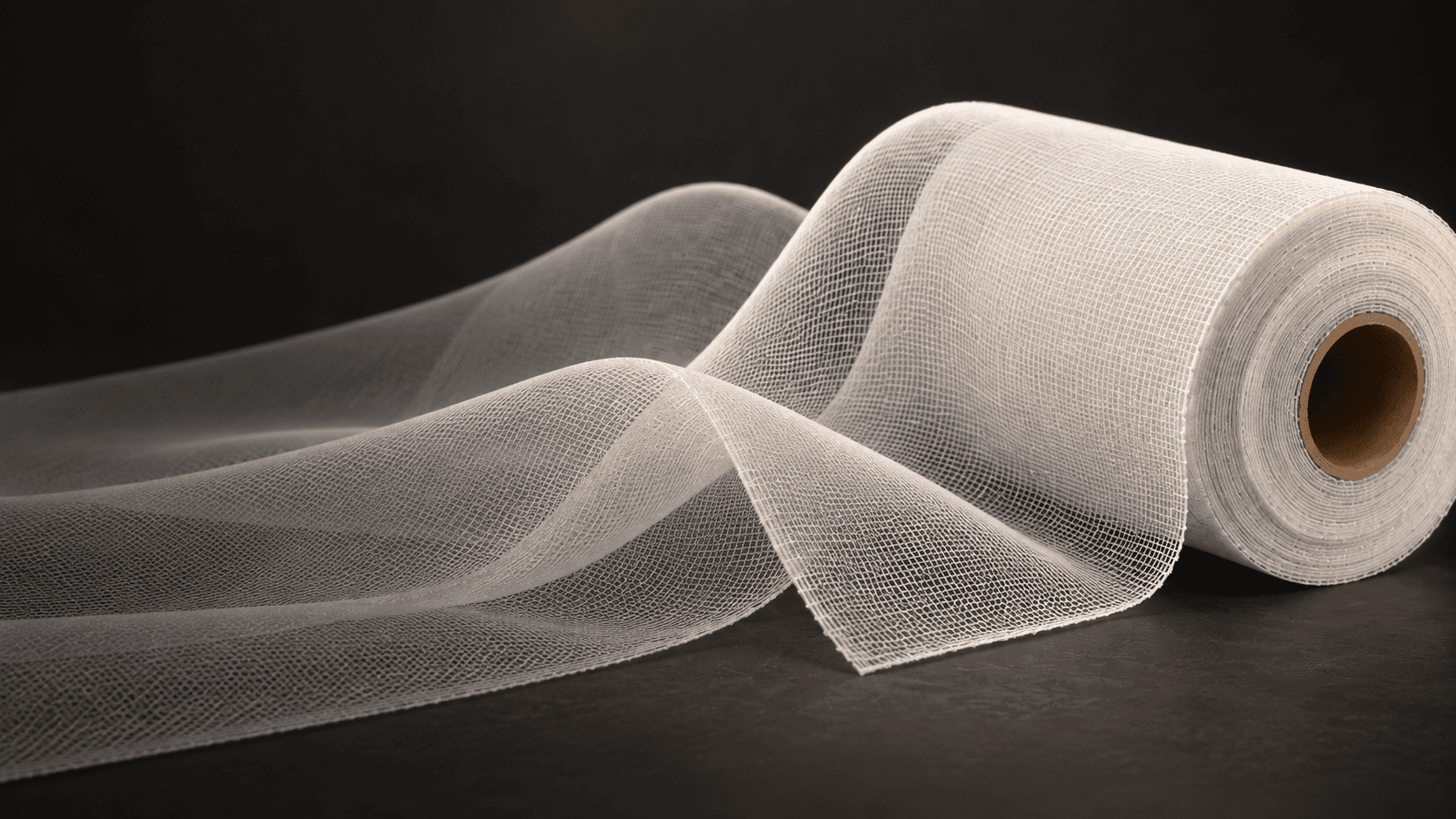
How to Choose Wedding Mesh Fabric for Bridal Gowns, Veils and Petticoats: A B2B Buyer’s Guide
Introduction
The best wedding mesh fabric is not a single construction. For a veil, the priority is usually a clean visual field, low bulk and a hand feel that works near the face. For a layered skirt, the priority may be controlled volume. For an embroidery ground, repeatable openings and stable width can matter more than drape. A useful B2B specification therefore starts with the garment function, then defines material, openness, stiffness, width, color and inspection method.
In practical sourcing, the phrase “bridal tulle” is often too broad for an order sheet. Two materials can both look white under a warehouse light yet behave very differently after several layers are cut, sewn, gathered and pressed. A supplier should be able to turn the design brief into a sampleable construction—not merely send a generic roll. This guide explains the questions that help a bridal brand, dress factory, distributor or costume workshop do that.
Start with the job the mesh must do
Choose by garment zone before choosing by name
“Tulle,” “net,” and “mesh” are commercial labels, not complete specifications. Start with where the fabric sits and what it must accomplish.
| Garment use | The first properties to define | Common sourcing risk |
|---|---|---|
| Veil or cape overlay | fine appearance, low visual weight, soft edge, color match | selecting a net that looks fine on a roll but feels abrasive when handled |
| Gown overlay or gathered sleeve | drape, recovery after gathering, transparency, seam behavior | choosing a fabric too stiff for the intended silhouette |
| Skirt layer | balanced openness, volume, layer compatibility, color consistency | relying on a single layer to create volume when the pattern needs structure |
| Crinoline or petticoat | stiffness, resilience, edge behavior, separation from skin | placing a firm net directly against the wearer without a lining or soft layer |
| Embroidery or appliqué ground | opening regularity, dimensional stability, support during decoration | approving a swatch without checking how it holds during the intended process |
The short answer for buyers is: choose a finer, softer construction when the mesh is visible or worn close to the body; choose a more stable, firmer construction when it must help create shape. The final choice is still sample-dependent because yarn, construction, finish, color and number of layers all affect the result.
Describe the desired result in observable terms
Instead of writing “soft mesh” only, give the supplier a use statement: “outer veil layer; ivory; should fall without a crisp stand-away effect; no direct skin contact except at the edge.” For a petticoat, write: “inner structural layer; must lift a full skirt; will sit behind lining; clean cut edge preferred.” These statements allow a supplier to recommend an appropriate construction and reveal misunderstandings early.
Photos are useful, but a physical reference or a retained approved cutting is better when the hand feel and color are critical. Explain whether the photograph is backlit, what layer it represents, and whether embellishment will be added. A factory can compare a reference under controlled conditions; it cannot reliably derive all construction details from a styled photograph alone.
Specify the material honestly: polyester, nylon, or another request
For many commercial bridal programs, polyester mesh is a practical starting point because it is widely used, available in broad color options, and can be supplied in different constructions. Nylon may be requested where a particular hand, appearance or construction is required. Neither label guarantees “soft,” “hard,” “premium,” or “scratch-free.” Those are properties of the finished fabric and should be checked by sample.
Ask the supplier to state fiber content on the sample card and production specification. If a product page lists 100% polyester as standard, do not describe a nylon option as available unless it has been confirmed for the intended construction, color, quantity and delivery window. When an alternative material is proposed, request a side-by-side sample with the same target use in mind.
What to evaluate in a material sample
- Hand feel: rub a folded sample between fingers and across a lined garment edge. This does not replace wearer trials, but it highlights obvious harshness.
- Visual clarity: place the mesh over the intended lining or base color. A white mesh can appear warmer, cooler, denser or more visible depending on the substrate.
- Layering: stack the planned number of layers. A fabric that looks almost invisible alone may become cloudy or structured in a stack.
- Cut and seam response: make a small sewn test using the planned stitch and edge method. Observe distortion, puckering, edge curl and snagging.
- Decoration compatibility: if embroidery, beading or appliqué is planned, test the actual method or ask the decoration partner to test it. The mesh must support the process, not simply look good before it enters production.
Understand mesh count and opening without treating one number as a quality grade
Mesh count can be useful for communicating relative openness, and Jinjue’s current product range states 10–80 mesh as customizable. However, do not choose a bridal fabric on mesh count alone. The appearance of an opening also depends on yarn size, construction, finish, dyeing, tension and how the fabric is held. A number that performs well in one construction may not produce the same hand feel or transparency in another.
Use mesh count as one line in a multi-point specification. Pair it with a close-up image, a named or approved sample, intended application, color, width and a description of desired firmness. If you need a specific opening geometry, ask for a magnified photo or physical cutting, and confirm whether the order will match the approved construction rather than merely a count range.
A practical sampling sequence
For a new bridal program, sample in two stages. First, narrow the choice to two or three constructions that satisfy the functional brief. Second, make a garment-relevant trial: a veil panel, a gathered skirt section, a petticoat ring area, or an embroidery panel. This costs less than discovering an unsuitable hand feel after bulk fabric has been cut.
During factory testing, record what was tested and under which conditions. “Passed QC” alone is not enough to inform the buyer. A useful sample record identifies the sample code, fiber content, color, width, date, intended garment position and reviewer comments. For repeat orders, retain the approved cutting as the reference for visual comparison.
Width, color and yield: details that influence cost and cutting efficiency
Width is a design and sourcing decision, not a line-item afterthought. Jinjue’s stated standard/custom width capability is 30–300 cm, but the available width must be confirmed against the chosen construction. A wide veil panel may reduce seams; a narrow width can be sensible for specific components or efficient cutting layouts. Tell the supplier the usable width required, whether selvage is included, and whether the pattern needs a continuous span.
Color must be approved against the actual companion materials. Terms such as “ivory,” “off-white,” and “champagne” are not universal color standards. Send a physical swatch when a critical match is required, or request a color lab dip/strike-off where that is part of the agreed process. View the sample in more than one lighting condition if the dress will appear under strong venue or photography lighting.
Yield should be calculated from the actual pattern and layer count. A low-cost fabric that creates excess cutting waste, requires more layers, or causes rework is not necessarily the lower-cost option. Ask for roll length, packing method and any practical tolerance relevant to your order; specify the measurement basis in the purchase order.
Build quality control into the order, not after it ships
Convert taste into inspectable checkpoints
The most useful QC plan combines objective checks with approved-reference comparison. Before bulk production, confirm the approved sample, specification sheet, color reference and labeling. During production, the supplier should be able to inspect for visible contamination, uneven appearance, holes, tension marks, inconsistent width and roll identification according to the agreed standard. The exact method, sampling plan and acceptance criteria should be agreed by both parties.
For shipment inspection, ask for evidence tied to the actual lot: roll labels, packing photographs, quantity/length records, carton markings and representative close-ups. If your order has a third-party inspection requirement, communicate it early so the factory can make the relevant lot and documents available. Do not rely on generic factory photographs as proof of your own shipment.
Questions to send with an RFQ
Use this checklist to make quotation and sampling more accurate:
- What is the finished application and garment position?
- Is the mesh outer-facing, layered, structural, embroidered, or lining-adjacent?
- Which fiber content is preferred or prohibited?
- What hand feel, openness and firmness are required?
- What color reference, width and usable-width requirement apply?
- What quantity, repeat potential and destination country are expected?
- Is a sample, lab dip, test cutting or shipment inspection required?
- What packaging, roll labeling and delivery information are needed?
CTA — Request a specification recommendation: Have a garment photo, physical sample or draft specification? Send your application, material preference, width, color and estimated quantity. The Jinjue Mesh team can recommend a sampleable construction and identify the details that still need confirmation. [Send Your Requirements](/inquiry)
Work with a supplier as a development partner
A capable supplier conversation is iterative. The buyer describes the application; the supplier proposes feasible constructions; samples are assessed in the real process; and the production specification is locked before bulk manufacture. This is particularly important for custom colors, very fine openings, wide widths, decoration bases and structural mesh where a small variation can change garment behavior.
At installation preparation or cutting-room handover, provide production teams with the approved sample code and handling notes. If the fabric is intended as a structural layer, specify where it is separated from the skin. If it is an overlay, identify the lining color used during approval. These simple notes help prevent a correct material from being used incorrectly.
Avoid the three expensive bridal-mesh sourcing mistakes
The first mistake is approving a swatch by appearance alone. A small, flat card does not show how a mesh behaves when it is gathered, cut on a curve, folded at a seam or stacked over a colored lining. Ask for enough material to make a use-relevant panel. For a veil, this may mean a longer hanging test; for a skirt, a shaped section with the intended layer count; for a decorative ground, the actual embroidery or appliqué process.
The second mistake is treating color as a name rather than an approval. “Ivory” can be a useful commercial description, but it cannot replace a physical standard when the mesh will sit over a specific lining, lace or satin. Keep the approved color cutting with the production record. Where color development is part of the order, state who must approve it and what happens if the first submission differs from the reference.
The third mistake is leaving packing and identification until the goods are finished. A multi-construction bridal order needs clear roll identification so the garment factory can distinguish a veil mesh from a structural net. Specify how rolls should be marked, packed and grouped. Confirm that the shipment inspection records relate to the actual order lot. This is a simple control that can prevent expensive mix-ups during cutting-room preparation.
Make the article useful after the first visit
This guide should link to the live wedding-mesh product page for current capability and to the inquiry page for sample requests. It should also link to the two companion articles: the polyester-versus-nylon comparison for material decisions and the soft-versus-hard guide for layer function. Use descriptive anchor text such as “compare polyester and nylon tulle” rather than repeated exact-match keyword links.
Add an author/reviewer line that identifies the actual textile or product-development reviewer, the date reviewed and the scope of their review. If a factory photo is used, caption the real production step and avoid presenting a generic image as evidence of a named customer order. This protects trustworthiness while giving readers the operational detail that generic content lacks.
FAQ
What mesh fabric is best for a wedding dress?
The best fabric depends on the layer’s function. A visible overlay or veil normally calls for a fine construction and suitable hand feel; a petticoat or crinoline layer needs more support. Approve a sample in the planned number of layers and against the intended lining before bulk ordering.
Is polyester mesh suitable for bridal gowns?
Yes, polyester is commonly used for bridal mesh and can be specified in different constructions. Suitability depends on the finished hand, openness, color and garment function, not fiber name alone. Request a sample for the exact use.
What information does a wedding mesh supplier need for a quotation?
Send the application, fiber preference, desired mesh/hand feel, width, color, quantity, target delivery point and any sample or inspection requirement. A reference swatch or garment image is helpful when supplied with context.
Can wedding mesh be customized by width and color?
Custom width and color may be possible, subject to the construction and order requirements. Confirm feasibility, lead time, minimum order quantity and approval process before committing the garment program.
How should bridal mesh be checked before shipping?
Compare representative fabric and packing evidence to the approved sample and written specification. Check identification, color, usable width, visible appearance, roll/packing records and agreed quantity. Use an independent inspection where your purchasing process requires it.
Conclusion
Choosing wedding mesh fabric is a controlled sourcing decision: define the garment job, request the right sample, assess it in layers and in process, then build the approved reference into production and shipment inspection. The more precisely a buyer describes application and acceptable outcome, the easier it is to avoid an attractive swatch becoming an unsuitable bulk material.
CTA — Get a custom bridal mesh quote: Send the intended use, sample reference, color, width and target quantity to receive a practical next-step recommendation. [Get a Quote](/inquiry)