
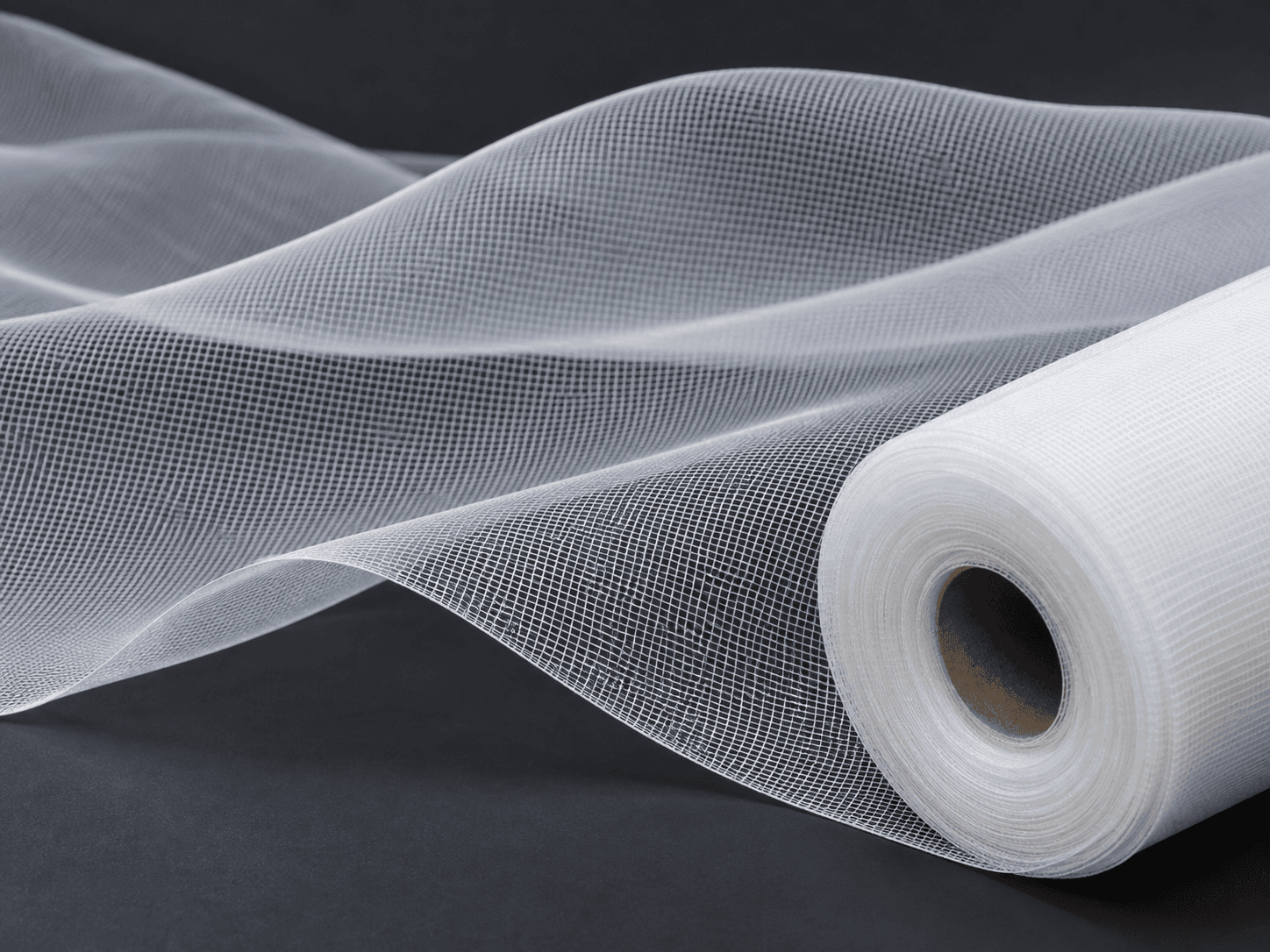
Polyester vs. Nylon Tulle for Bridal Wear: Which Should You Source?
Introduction
For bridal sourcing, polyester versus nylon tulle is not a contest with one permanent winner. The better choice is the material and construction that performs correctly in the finished garment: against the lining, in the required number of layers, after cutting and sewing, and during the intended decoration process. A brand that asks only “which is softer?” can receive an incomplete answer, because softness is influenced by construction, yarn, opening, finish and fabric weight as well as fiber.
As a practical starting point, polyester is often chosen for commercial bridal programs that need broad specification flexibility and repeatable sourcing. Nylon may be requested for a particular feel or visual effect. The correct procurement approach is to define the result, compare like-for-like samples, and lock the approved construction before bulk production. This guide gives purchasing and product-development teams a defensible way to do that.
The quick answer for buyers
Choose polyester tulle when your approved sample meets the hand, appearance, color and construction requirements and you need a practical standard material for a bridal program. Consider nylon tulle when the project requires a specific nylon-based construction or hand that has been proven by sample. Do not substitute one for the other solely by name, and do not assume either fiber automatically provides a certain softness, stiffness or quality level.
The terminology also varies by market. A supplier may use “tulle,” “mesh,” “net,” “bridal net,” or a local construction name. Put the fiber content and an approved sample code on the specification sheet. That reduces the chance that a familiar commercial term is interpreted as a different fabric at the production stage.
Compare the factors that affect the garment—not marketing claims
| Evaluation factor | What to ask or test | Why it matters |
|---|---|---|
| Hand feel | Compare folded samples and a garment-relevant sewn edge. | Visible bridal layers are handled, gathered and sometimes worn close to skin. |
| Drape and stand-away | Hang one layer and the planned stack of layers over the intended lining. | A single layer rarely predicts the final silhouette. |
| Openness and visual density | Review under front light and backlight, ideally against the dress base. | The same mesh can look nearly invisible or noticeably cloudy depending on layering. |
| Color response | Match against an approved reference and companion fabric. | “Ivory” and “white” are not universal standards. |
| Process behavior | Test cut edge, seam, gathering, decoration and pressing in the real workflow. | A beautiful swatch can fail at the sewing or embellishment stage. |
| Supply consistency | Confirm sample code, construction, width, color process, packaging and inspection plan. | Material selection is only useful if bulk material can be matched to the approval. |
Fiber is one component of a finished construction
When someone says nylon tulle feels softer, they may be describing a specific fine nylon construction rather than a rule that applies to all nylon meshes. Similarly, a polyester mesh can be made for a delicate appearance or for firm structural support. Use fiber content as a required specification field, then examine the finished fabric in the context of its intended use.
For product pages and buyer documentation, avoid vague statements such as “nylon is always luxury” or “polyester is always hard.” They create avoidable expectation gaps. A transparent statement is more credible: “We will recommend an available construction based on your use case; hand feel and color are approved by sample before bulk production.”
When polyester is a sensible starting point
Polyester is commonly used in bridal mesh and is the standard material shown on Jinjue’s current wedding-mesh product specification. It is a sensible opening option when the program needs a defined commercial construction, custom color or width discussion, and repeatable B2B specification. The buyer should still evaluate the particular sample for feel, openness, drape and compatibility with its garment process.
Typical polyester tulle use cases
- Fine outer layers where the approved construction gives the desired transparency and movement.
- Veils and accessories where color, width and appearance are validated against a reference.
- Decorative and embroidery bases, after the actual decoration process has been tested.
- Layered skirt programs where the construction delivers the intended balance of body and visual lightness.
- General bridal supply programs that need clear product codes, order records and re-order discipline.
None of these uses should be treated as automatic approval. For example, a soft-looking polyester sample may become too visible over a darkened lining, while a firmer construction may be exactly right behind a skirt lining. The sample must represent the planned fabric layer and not merely the color family.
When to request a nylon option
Request nylon samples when the design team has a proven nylon reference, the product specification calls for nylon, or a comparative trial is needed to reach a particular appearance or feel. Provide the supplier with the reference sample and the finished use case. If an exact match is not feasible, ask for the closest available alternatives and note the differences rather than assuming an unnamed “nylon tulle” will behave identically.
Nylon availability, construction options, dyeing, minimum quantity and lead time can vary by specification. Treat these as quotation questions, not fixed assumptions. If continuity is critical, ask how the approved sample will be identified for reorders and what approval is needed when a material, finish or color process changes.
Do not compare unlike samples
A useful comparison pairs samples that are close in opening, color and intended application. Comparing a very fine soft nylon with a coarse structural polyester net answers almost nothing about the fiber difference; it mainly compares two different constructions. A controlled comparison can use equal-size pieces, the same lining color, the same number of layers and the same sewn/gathered test.
Ask reviewers to record observations rather than only a preference: “Sample A shows less edge visibility on the ivory lining,” “Sample B provides more skirt lift with two layers,” or “Sample C remains stable during appliqué placement.” This creates a development record that a purchasing team can reference later.
A sampling and approval workflow for bridal tulle
Step 1: Write the functional brief
State the garment type, layer position, contact with skin, desired silhouette, lining color, proposed decoration, target width, color and order estimate. Include whether the fabric will be gathered, circular-cut, heat-cut, bound, embroidered or beaded. This guides the sample selection much better than a request for “good-quality tulle.”
Step 2: Request coded alternatives
Ask for a small set of clearly coded samples: for example, two polyester constructions and one nylon alternative if that comparison is genuinely needed. Each sample should identify fiber content, color, usable width and construction reference. Avoid a large unstructured sample pack; it makes approval less traceable.
Step 3: Test in a product-relevant setting
Make a mini-panel with the intended lining and layer count. For a veil, assess transparency, fall and edge. For a skirt, assess fullness and movement. For embroidery, use a representative motif or process. Record the process and review under the lights relevant to design approval where possible.
Step 4: Lock the reference before bulk
Once a sample is selected, retain an approved cutting and issue a simple specification sheet. Include sample code, fiber, color reference, width, end use, notes on hand/appearance, quantity and packing requirement. Confirm the supplier’s ability to meet the written document before production begins.
Step 5: Inspect the actual shipment
Before dispatch, request order-specific documentation: roll identification, packing photos, quantity/length records and representative fabric images. Compare these with the approved sample and purchase-order requirements. If a buyer needs laboratory tests, shade-band review or independent inspection, it should be agreed before the shipment stage.
CTA — Compare samples for your design: Send a photo or swatch of the target look, the garment use, color and required width. Request side-by-side polyester and nylon options only where the comparison will support a real decision. [Ask for Product Catalog](/inquiry)
Cost, minimum quantity and risk: ask the questions early
Material price is only one part of a bridal program’s cost. Consider sampling, color development, minimum quantity, fabric width, cutting yield, decoration compatibility, reject risk and re-order consistency. A material that is cheap per meter but incompatible with the design can create more waste and delay than a slightly higher-priced approved alternative.
Ask a supplier to separate confirmed facts from estimates. For example: “This is the available standard construction,” “this color requires sample approval,” “this width is subject to production confirmation,” or “this alternative needs a minimum quantity.” Clear qualifications are more useful than an overconfident promise. They give purchasing teams a basis for scheduling and product costing.
Plan reorders before the first bulk purchase
Bridal collections often return to a successful fabric after the first season, sometimes with a different color or a new dress shape. The first order is the best time to make reordering easier. Keep the approved cutting, supplier sample code, fiber content, mesh/construction reference, color standard, usable width and order date together. Record whether the approval was based on a single layer, a specific lining or a garment sample. Without this record, a team may later request “the same tulle” and receive a result that is technically close but visually wrong in the new context.
For color continuity, agree in advance how shade variation will be reviewed. This is not a promise that all lots are visually identical; it is a process for comparing an available production lot with the approved reference before it reaches a critical garment stage. For planned repeat programs, ask whether an approved standard can be retained and how any material or process change will be communicated. A reliable supplier treats the question as part of quality planning, not as an inconvenience.
Questions a purchasing manager can ask on one call
Ask which sample is the standard construction, which alternatives are genuinely available for the target quantity, and whether the proposed width is usable for the pattern. Ask how color is approved, which order-specific documents can be provided before dispatch, and when a third-party inspection must be scheduled. If the garment requires decoration, ask who will validate the interaction between mesh and the decoration process. These questions turn a material discussion into a sourcing plan.
The answers should be specific enough to document. “We can do it” is not a specification; “we can submit sample code X in 280 cm usable width, subject to color approval and agreed minimum quantity” is a decision-ready answer. When information is not yet confirmed, record it as open rather than filling the gap with a generic claim.
Decision example: turn a comparison into an approval
Imagine a brand developing an ivory three-layer skirt overlay. Rather than asking for “the softest tulle,” the team sends the lining swatch and requests two comparable polyester samples plus one nylon option, all coded. It gathers each sample at the planned ratio, places it over the actual lining and checks the look under its design-review lighting. If the selected polyester construction gives the required transparency and movement, that is a sound approval; nylon does not need to be selected simply because it was included in the test. If none performs correctly, the review record explains whether the next variable should be opening, finish, color, layer count or construction.
This kind of controlled comparison also makes supplier communication clearer. The factory receives a conclusion tied to a sample code and an application, while the buyer receives evidence for a material choice. It is more reliable than a preference formed from a small swatch held in isolation.
Build E-E-A-T into the page and into the process
For an authoritative bridal-material article, show the decision process rather than pretending all fabrics are identical. Use original close-up photos of your samples, factory testing steps where permitted, and shipment inspection records that relate to the order being discussed. Label generic illustrative images honestly. Add an author or reviewer who understands textile specification, and update the piece when product ranges change.
This approach is also suitable for AI search. A concise answer, a visible comparison table and clear caveats make it easier for a search system to retrieve the right passage without the page making unsupported claims. Google recommends unique, helpful content rooted in first-hand expertise and warns against generating many pages solely for query variations; a carefully documented comparison is more valuable than a collection of thin “X vs. Y” pages.
FAQ
Is nylon tulle softer than polyester tulle?
It can be in a particular construction, but fiber content alone does not determine softness. Compare finished samples with similar opening, color and intended use. Test the planned layers and sewn edge before deciding.
Is polyester tulle good for wedding dresses?
Polyester tulle can be suitable for wedding dresses, veils, skirts and decorative bases when the approved construction meets the design requirements. Assess the exact sample for hand feel, transparency, color and process behavior.
Which tulle is better for a veil?
A veil normally needs a fine visual field, appropriate drape and a comfortable edge. The best choice is the sample that performs correctly in the chosen veil length, layer count and color—not a fiber label alone.
Can I order polyester and nylon tulle in the same color?
Possibly, but matching depends on the construction, dyeing process and color standard. Submit the desired reference and approve each material separately; do not assume names such as ivory will match across fibers.
What should I inspect before shipment?
Check order-specific roll identification, fiber/construction reference, color, usable width, quantity, visible appearance and packing against the approved sample and purchase order. Agree any third-party inspection or test requirement before production is complete.
Conclusion
Polyester and nylon tulle should be sourced as finished, application-specific materials—not as stereotypes. Write a functional brief, compare like-for-like samples, test the real garment process and retain an approved reference for bulk and reorders. That sequence gives both design and purchasing teams a clear, supportable decision.
CTA — Request a material comparison: Share your bridal application, reference image or swatch, color, width and expected quantity. We can help identify a practical polyester standard and any nylon comparison worth sampling. [Contact Us](/inquiry)